Jason Zimmerer: Manager, Mentor, and PostDoc
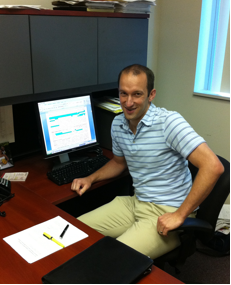 How did you first become interested in the science field?
My interest in science started early in my childhood. As the son of a family practitioner, I was exposed to medical science at a young age. I can remember, when I was around 6 years old, asking my father how the body worked and what caused people to become ill. My parents encouraged my interest in science by subscribing to educational magazines (e.g., Zoobooks) and taking me to the library where I loved to read books on dinosaurs, geology (which led to a rock and mineral collection), and astronomy (I even went to NASA’s Space Camp).
My fifth grade teacher, Mr. Price, had a unique teaching method in which he allowed his class to be creative and explore while encouraging his students to work in teams to learn new things. Specifically, he stressed science and mathematics. This was the first time I enjoyed going to school to learn. This interest was heightened by my favorite classes in high school which were biology, zoology (Mr. Taylor-Lehman) and advanced chemistry (Mr. Stillwell). Both teachers were charismatic and made the challenge of learning an enjoyable experience. I pursued my interest in science by attending Ohio Northern University as a biochemistry major. Not only was I partial to the time spent in the laboratory, I also enjoyed a journal club based class where I learned about the genes that regulate cell growth and development and the importance of these genes in cancer (Dr. Broekemeier). This was the first instance where I wanted to learn more about cancer and cancer research.
Though I often considered following in my father’s footsteps by attending medical school, I became more interested in cancer research after a summer internship in the Dr. Caligiuri laboratory (Ohio State University Medical Center, Columbus, Ohio). After much thought, I decided to attend graduate school at Ohio State University’s Integrated Biomedical Science Graduate Program.
Please share a bit about your research, how did you choose the topics of your studies?
During my dissertation research in the Dr. William Carson laboratory (Comprehensive Cancer Center, Ohio State University Medical Center, Columbus, Ohio) I researched malignant melanoma. There I studied how the immune cells respond to interferon-alpha, a cytokine-based therapy, both in mice and human patients. The dogma at the time was that interferon-alpha inhibited cancer directly through anti-angiogenesis and inhibition of tumor proliferation. However, the Carson lab and others have shown that immune cells likely play a critical role in anti-tumor response to interferon-alpha therapy. In one mouse model study, we show that CD8+ T cells were critical for the rejection of B16 melanoma tumors. Although the focus of my dissertation research was largely on intracellular Jak/STAT signaling, suppressors of cytokine signaling, and gene transcription following interferon-alpha therapy in multiple immune cells of mice and melanoma patients, I became more interested in CD8+ T cells and how these cells could be utilized to eliminate tumor.
I continued my interest in CD8+ T cells by joining the Dr. Ginny Bumgardner laboratory (Comprehensive Transplant Center, Ohio State University Medical Center, Columbus, Ohio) to study immune responses following allogeneic transplants. In the field of transplant immunology, I am, as I like to say, “looking at the opposite side of the same coin” with respect to cancer immunology. In cancer research, the goal is to study how to manipulate immune cells to eliminate/kill the tumor. In transplant research, the goal is to prevent the immune cells from destroying the transplanted allografts (foreign organ/tissue) that was given to a patient to reconstitute lost organ function. In both cases immunology plays a central role, particularly CD8+ T cells. In the Bumgardner laboratory, my research has involved many projects including investigation of the CD8+ T cell cytotoxic mechanisms, regulatory function, and memory responses.
What are the most common problems you face in lab on a day-to-day basis?
As the sole postdoctoral researcher in the lab, I have taken on additional duties including being the manager of overall laboratory function, lab safety manager, and manager of our animal protocols. Over the years, I have mentored several undergraduate students, graduate students, and medical residents. I have found it most challenging to delegate tasks to others. I tend to be compulsive about how certain things should be done. I have learned, however, that as a postdoctoral researcher or a principal investigator, you cannot do everything. It is best to train others how to do tasks appropriately and safely and allow for creativity and let them to learn their own ‘best way.’ Giving students my trust and allowing them to learn from their own mistakes has been difficult. However, one of the most enjoyable experiences in the lab has been mentoring students/trainees and watching them mature into confident, independent researchers.
What is it that gets you motivated to come to the lab every morning?
My dissertation mentor has been known to say “Cancer never sleeps.” Although it was said tongue in cheek as trainees left the lab to go home for the day, there is truth to the statement. Cancer and many other diseases continue to be a major threat to patients’ health. Because many therapies have limited efficacy, research is critical to create better treatments and diagnostics. During my dissertation research, I consulted patients with malignant melanoma in order to obtain consent for blood draws. In meeting these patients, I was able to appreciate the effect that cancer can have on people and their families. Unfortunately, my wife and I have experienced this devastation firsthand, as several of our family members have been victims of cancer-related death. Regardless of what your research involves, the end goal is to improve society. Keeping this goal in mind can be an incredible motivator.
What do you think is the most important personal characteristic for a researcher?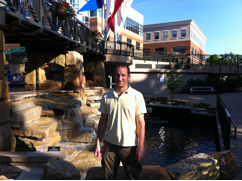
There are several characteristics that a successful researcher must have including being creative, intelligent, hard-working, passionate, and perseverant. As postdoctoral researchers, we inherently have most, if not all of these characteristics. However, it may be surprising, but I believe the most important attribute one can have is to be a teacher. This is not just in the lab setting of mentor/trainee but in all facets of research. I have learned that great data and ideas do not get published or funded, respectively, on their own. Instead, you must be able to communicate the science in a clear and well organized fashion that can ‘teach’ the reviewers and reading audience. In addition, at conferences or social settings, you will need to be able to discuss your research in layman’s terms as you communicate with new trainees, colleagues, peers, or even family and friends.
What is the best advice you could give to someone who wants to be a postdoc?
It has recently received national attention that postdoctoral trainees are finding it difficult to find a career of their choice. Therefore, I believe it is critical to know what you want out of your postdoctoral training and whether you are prepared for that challenge. Before you commit, talk to other postdoctoral researchers, your dissertation PI, and other mentors with a similar career path to your goals.
Can you share any tips for lab management and organization?
I have found that laboratory management of experiments and papers is best done by writing everything down. You can map about a week’s or month’s worth of experiments and determine what supplies you need to accomplish those goals. I also find it helpful to draw out projected experimental figures and/or paradigms before anything is started to direct the project towards a publishable manuscript or a fundable grant application.
Make time for yourself. Scientific research is a field that can absorb all of your time, if you let it. For your own mental health, it is important to balance work and family life. I would suggest getting involved with a cause or hobby of which you are passionate. For example, you can volunteer for a local charity or join a recreational sports team.
The biggest advice I can give is to not be afraid to ask for help. You cannot be an expert at everything. Talk to the experts in your field at your institution and at local, regional, and national meetings. This is where you can learn new research perspectives, new research ideas, collaborations, and networking with individuals who may become important for your next career step.
Publications:
Zimmerer J.M., Pham TA, Sanders VM, & Bumgardner GL (2010). CD8+ T cells negatively regulate IL-4-dependent, IgG1-dominant posttransplant alloantibody production. Journal of immunology (Baltimore, Md. : 1950), 185 (12), 7285-92 PMID: 21084663
Zimmerer, J.M., Sun, Q., G.A. Hadley. Transplant Immunology. AST Primer on Transplantation, Chapter 1. 3rd edition. Editor: Donald Hricik. March 2011.

 Loading ...